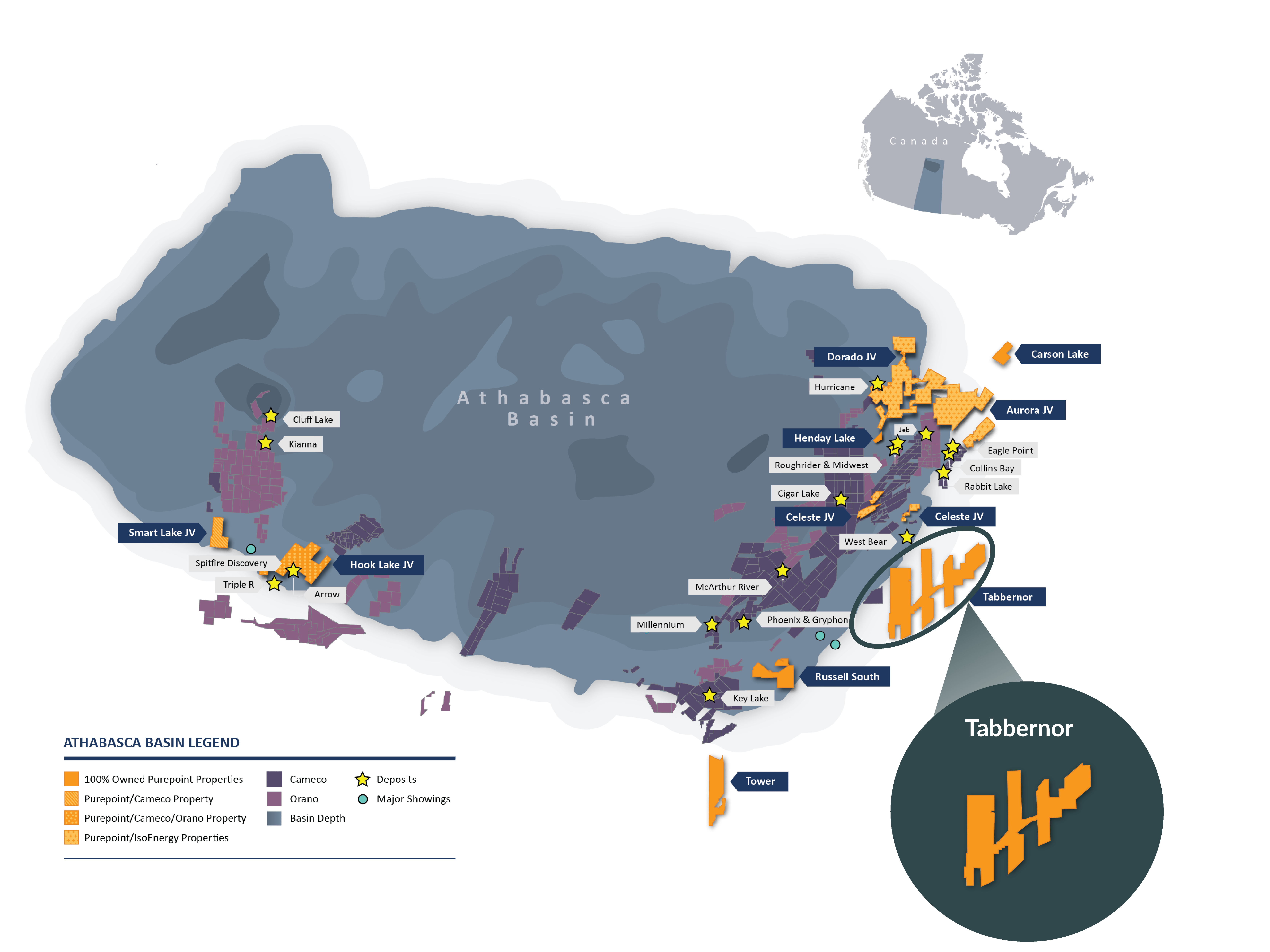
Due South of Some of the Basin's Largest Uranium Deposits
About Tabbernor Project
How Mobile Sports Betting Apps Reshaped UK Wagering Habits, Explored by Betzella
The United Kingdom has long maintained one of the most regulated and mature gambling markets in the world, but the arrival of smartphone technology fundamentally altered the relationship between bettors and bookmakers. What began as a cautious experiment by a handful of operators in the late 2000s evolved into a structural transformation of the entire wagering industry. By the mid-2010s, placing a bet had shifted from a deliberate visit to a high street shop to an impulsive, always-available activity conducted from a sofa, a stadium seat, or a commuter train. Understanding how this shift happened — and what it has meant for behaviour, regulation, and the market itself — requires looking closely at the technological, legal, and social forces that converged in a relatively short period.
The Regulatory Framework That Made Mobile Betting Possible
The foundation for the mobile betting revolution in the UK was laid not by technology companies but by legislators. The Gambling Act 2005, which came into full effect in September 2007, liberalised advertising rules and created a licensing framework administered by the Gambling Commission. This opened the door for operators to market directly to consumers in ways that had previously been restricted. Remote gambling — defined broadly to include internet and telephone wagering — was formally recognised and regulated, giving operators the legal certainty they needed to invest heavily in digital infrastructure.
When Apple launched the App Store in July 2008, the timing was almost coincidental in its convenience. Within two years, major UK bookmakers including Bet365, William Hill, and Ladbrokes had developed dedicated iOS applications. Android followed a more complicated path because Google initially restricted real-money gambling apps in its Play Store for UK users until 2017, meaning Android bettors had to rely on mobile-optimised websites or sideloaded APK files for nearly a decade. This fragmentation shaped early user behaviour and partly explains why certain operators invested more heavily in responsive web design rather than native applications during that period.
The Gambling (Licensing and Advertising) Act 2014 further tightened the framework by requiring all operators serving UK customers — including those based offshore in Gibraltar, Malta, or Alderney — to hold a Gambling Commission licence. This had direct implications for mobile products, as it standardised responsible gambling features such as deposit limits, self-exclusion tools, and reality check notifications across all platforms accessible to UK residents. The legislation effectively raised the floor for what a compliant mobile betting product had to offer.
Behavioural Shifts: When and How People Bet Changed Entirely
Perhaps the most significant consequence of mobile access was the collapse of temporal and spatial boundaries around betting. Pre-smartphone, the act of placing a bet required either visiting a licensed betting office during opening hours or accessing a desktop computer. Both scenarios imposed friction — time, effort, deliberation. Mobile eliminated that friction almost entirely, and the behavioural data that emerged from operators in the years following was striking.
Gambling Commission surveys from the mid-2010s onward documented a consistent migration of activity away from retail premises. In 2012, approximately 53 percent of online gamblers reported using a mobile device for betting. By 2019, that figure had risen to over 80 percent for sports betting specifically, with in-play wagering — bets placed during live sporting events — accounting for a growing share of total gross gambling yield. In-play betting is almost entirely a mobile phenomenon; its real-time nature suits a device that users carry with them to stadiums, pubs, and living rooms.
The rise of mobile sports betting apps reshaped not just when people bet, but how frequently they engaged with betting markets across a single event. A football match that might previously have generated one pre-match bet from a given customer could now generate multiple micro-bets on next goalscorer, next corner, or half-time result. Operators designed their products specifically to encourage this granular engagement, with push notifications, streaming integrations, and one-tap bet placement reducing the cognitive effort required at each decision point. Analysts at the Gambling Commission and independent researchers at the University of Bristol noted that this product architecture increased session length and the number of distinct betting decisions per session, raising questions about its interaction with problem gambling risk.
Betzella has examined these behavioural dynamics in the context of broader European market comparisons, noting that the UK’s combination of early regulatory clarity and high smartphone penetration produced a more accelerated transition than comparable markets in Germany or France, where stricter advertising rules and later licensing reforms slowed mobile adoption among mainstream consumers.
Market Concentration and the Competitive Consequences
Mobile technology did not simply grow the existing market; it restructured competitive dynamics within it. The capital requirements for building and maintaining a competitive mobile product — including real-time data feeds, streaming rights, geolocation compliance systems, and continuous UX development — created significant barriers to entry that favoured large, well-capitalised operators. Between 2010 and 2020, the UK market saw consolidation through mergers such as Ladbrokes and Coral combining in 2016 under the GVC Holdings umbrella, and Paddy Power merging with Betfair in 2016 to form Flutter Entertainment. These were not coincidental; scale was increasingly necessary to sustain the technology investment that mobile competition demanded.
Smaller independent bookmakers, particularly those operating primarily through retail shops, found themselves structurally disadvantaged. The Gambling Commission’s annual statistics show that the number of licensed betting offices in the UK declined from approximately 9,000 in 2013 to around 6,700 by 2022, a contraction driven partly by the Fixed Odds Betting Terminal stake reduction in 2019 but also by the sustained migration of customers to mobile channels. For many high street shops, the profitable customer had simply moved online.
At the same time, mobile created opportunities for newer entrants that could build lean, digital-first operations without the overhead of retail infrastructure. Companies like Betway, which launched its UK mobile product in 2012, and later operators focused on specific niches such as exchange betting or daily fantasy sports, were able to compete on product quality rather than physical presence. The Gambling Commission’s licensing data shows that the number of remote operating licences issued grew substantially through the 2010s, even as retail licences contracted — a clear indicator of where the market’s centre of gravity had shifted.
Betzella’s analysis of operator revenue distributions suggests that by 2021, remote channels — of which mobile represented the dominant share — accounted for over 60 percent of total gross gambling yield in the UK sports betting sector, compared to under 30 percent a decade earlier. This rebalancing had tax implications as well, since remote gambling duty applies differently from the point-of-consumption tax structures that had historically governed retail operations.
Responsible Gambling Challenges and the Regulatory Response
The convenience that made mobile betting so commercially successful also concentrated regulatory concern. The Gambling Commission’s Health Survey data and academic research — including the 2021 Gambling Survey for Great Britain pilot — consistently identified a subset of users for whom mobile access appeared to correlate with higher-risk gambling behaviour. The always-on nature of mobile, combined with product features designed to maximise engagement, created conditions that differed meaningfully from the more bounded experience of retail betting or even desktop online gambling.
Regulators responded incrementally. The National Online Self-Exclusion Scheme, GamStop, was expanded and made mandatory for all Gambling Commission licensees in 2018, creating a single register that applied across all mobile and online platforms. Operators were required to implement affordability checks and enhanced due diligence for customers showing markers of harm, though the precise thresholds and methods remained a source of ongoing debate between the industry and public health advocates through the early 2020s.
The Gambling Act Review, initiated by the UK government in December 2020, specifically addressed mobile and online products in its scope. The resulting white paper, published in April 2023, proposed a range of measures including stake limits for online slots, mandatory financial risk checks for customers spending above defined thresholds, and enhanced requirements around the design of products to reduce features associated with harmful play. These proposals directly targeted the mobile environment, where such features were most prevalent and most easily deployed at scale.
Operators invested in technology-driven harm reduction tools, including algorithmic systems that identified behavioural patterns associated with problem gambling and triggered interventions. Some of these systems, developed in partnership with organisations such as GamCare and the Gambling Health Alliance, used machine learning models trained on anonymised account data to flag accounts for review before customers self-reported problems. The effectiveness of these tools remained an active area of research, but their deployment represented a meaningful shift in how the industry conceptualised its obligations in the mobile context.
The trajectory of mobile wagering in the UK illustrates how a single technological shift can simultaneously expand a market, concentrate it, and generate regulatory pressures that reshape it again. From the Gambling Act 2005 to the white paper proposals of 2023, the legal framework has continuously adapted — often reactively — to the realities of a betting landscape that now lives in consumers’ pockets. Betzella’s ongoing monitoring of these developments reflects the broader industry recognition that mobile is no longer a channel within sports betting; it is, for most practical purposes, what sports betting has become. The policy and product decisions made in the coming years will determine whether that transformation continues to expand access while managing harm, or whether stricter intervention fundamentally alters the experience that millions of UK bettors have come to regard as ordinary.
The 100% owned Tabbernor Project was staked along three major trends of the Tabbernor Fault System, a deep seated, 1,500-kilometre crustal shear system that runs north through the Athabasca Basin. The system not only hosts over 80 historic mines and gold occurrences but also crosscuts the Basin’s mine trend aligning itself with 8 of the Basin’s largest uranium discoveries.
The Tabbernor Project consists of 34 claims that total 79,463 hectares. The original block of three north-south claim groups (23 claims) that covered Tabbernor structures have now been joined by an additional 11 claims that cover a strong east-northeast trending corridor of conductive rocks.
Tabbernor Fault System
The Tabbernor Fault System (TFS) is a wide, >1,500 km geophysical, topographic, and geological structural zone that trends approximately northward along Saskatchewan’s eastern boundary. Purepoint’s research has shown that although none of the province’s currently known uranium deposits have been linked to the north-south trending TFS, localized shear zones hosting uranium mineralization may have an associated north-south structural component.
Reactivation of the TFS may have coincided with the age of formation of large uranium deposits in the Athabasca Basin (Davies, 1998). Davies also concluded that structural similarities between the TFS and mineralized areas suggest that the fault system may have had a control on the location of mineralization. More specifically, he considered that several deposits, such as the Sue, Midwest, Dawn Lake and Rabbit Lake all demonstrate a north-south control and strong Tabbernor-like characteristics.
Purepoint has staked claims to the south of the Athabasca Basin based on interpreted north-south lineaments linking the Key Lake and Millennium deposits, the Midwest and West Bear deposits, the Jeb and Raven deposits, and the Collins Bay and Eagle Point deposits.
Reference:
Davies, J.R. (1998): The origin, structural style, and reactivation history of the Tabbernor fault zone, Saskatchewan, Canada; Master’s thesis, McGill University, Montreal, Quebec, 105p.